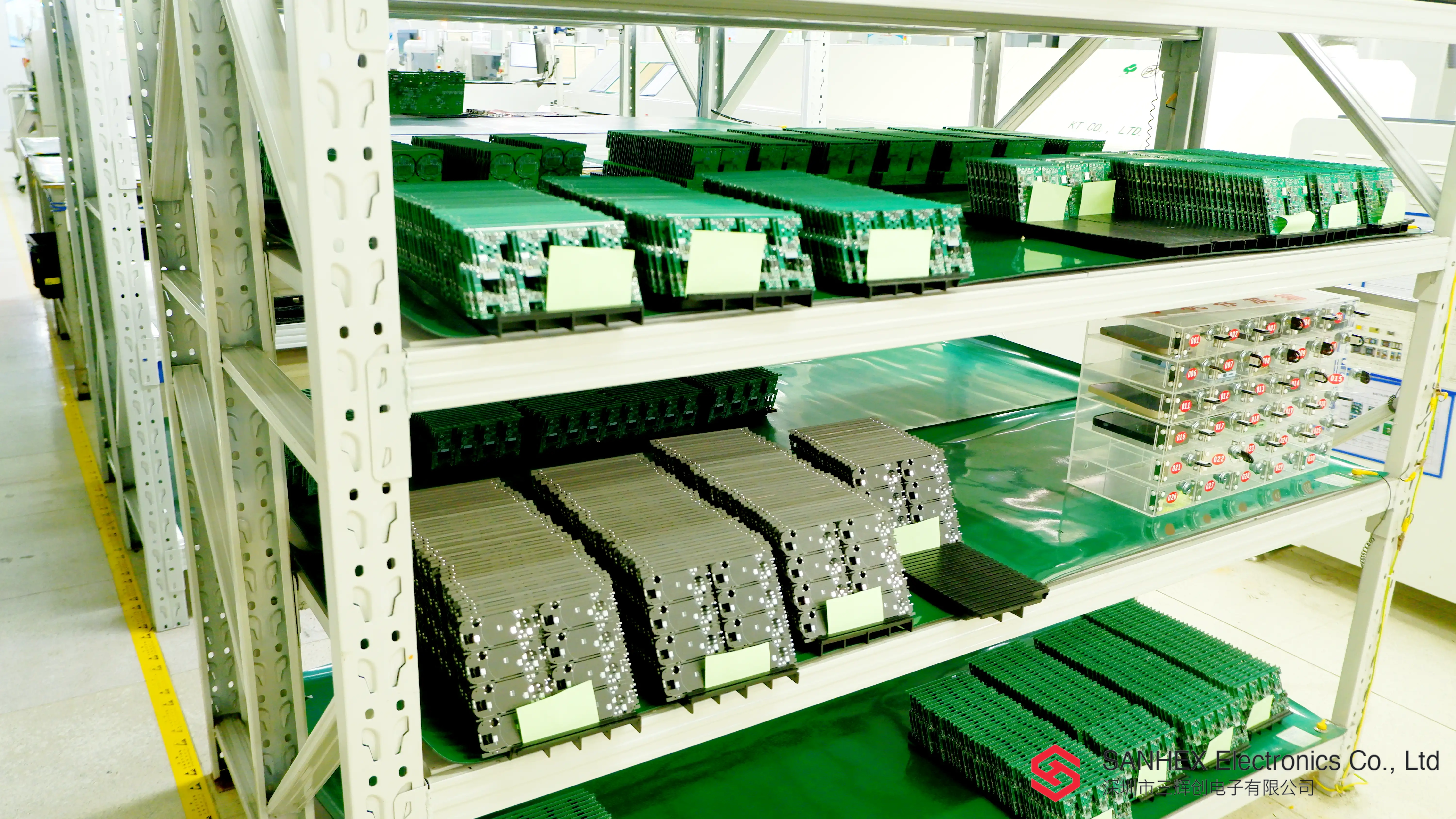
The Power Supply Unit (PSU) is the heart of almost every electronic device, from consumer gadgets to industrial machinery. Its quality and design directly impact the performance, longevity, and—most crucially—the safety of the entire system. At the core of the PSU is the Power Supply Board PCBA (Printed Circuit Board Assembly).
Designing a robust and compliant Power Supply PCBA requires meticulous attention to three pillars: Safety, Efficiency, and High-Reliability. This guide breaks down the essential considerations for each.
Pillar 1: Safety Design for Power Supply PCBAs
Safety is non-negotiable. A poorly designed power supply can lead to electric shock, fire, and component failure. Compliance with international standards is paramount for any power supply board PCBA.
Key Safety Considerations:
- Insulation and Creepage/Clearance Distances: These are the minimum physical distances required between conductors carrying different voltages. Creepage is the shortest path along the surface of an insulating material, while Clearance is the shortest path through air. Maintaining these distances prevents arc flashes and electrical tracking, especially between the primary (high voltage) and secondary (low voltage) sides of the board.
- Action: Refer to standards like IEC 60950 or IEC 62368-1 to determine the appropriate distances based on the working voltage and pollution degree.
- Component Derating: Operating components far below their maximum specified limits (voltage, current, power) drastically reduces stress and the risk of failure or overheating.
- Example: A capacitor rated for 100V should ideally be used in a circuit where the maximum operating voltage is less than 80V (20% derating).
- Fusing and Protection Circuits: Include fuses and circuit breakers to immediately interrupt the current flow in case of a short circuit or overload, preventing catastrophic failure and fire. Surge protection devices (SPDs) should also be included to handle transient voltage spikes.
Pillar 2: Efficiency Optimization
The efficiency of a power supply is the ratio of output power to input power. Higher efficiency means less wasted energy (as heat), resulting in lower operating costs and a cooler, more reliable system. This is a critical factor in modern power supply board PCBA design.
Strategies for High Efficiency:
- Topology Selection: The chosen circuit topology (e.g., Flyback, Forward, Half-Bridge, LLC Resonant) significantly impacts efficiency. Resonant topologies (like LLC) are often favored for high-power applications due to their ability to achieve Zero Voltage Switching (ZVS) or Zero Current Switching (ZCS), which reduces critical switching losses.
- Component Choice:
- MOSFETs/Transistors: Utilize Low $R_{DS(on)}$ MOSFETs (for lower conduction losses) or Wide Bandgap (WBG) semiconductors like Silicon Carbide (SiC) and Gallium Nitride (GaN), which offer superior high-frequency switching performance and minimal switching losses.
- Diodes: Use Schottky diodes or Synchronous Rectification on the secondary side for lower forward voltage drop and reduced heat generation.
- Thermal Management: Efficient heat dissipation is crucial. Large copper planes, proper component placement, and the use of heat sinks or fans (for forced-air cooling) are essential to maintain components at or below their safe operating temperature limits.
Pillar 3: High-Reliability Design and PCBA Manufacturing
Reliability refers to the probability that a power supply will function without failure for a specified period under defined conditions. It is a function of design quality, component selection, and manufacturing processes for the power supply board.
Design and Manufacturing Best Practices:
- Component Quality: Use AEC-Q qualified (for automotive) or high-grade industrial components from reputable suppliers. Always consider the Mean Time Between Failures (MTBF) data provided by manufacturers.
- Capacitor Selection (Critical): Capacitors, especially electrolytic capacitors, are often the life-limiting components in a power supply due to their sensitivity to temperature.
- Tip: Choose capacitors with a higher temperature rating (105°C instead of 85°C) and ensure they are placed away from high heat sources (like transformers or switching devices).
- PCB Layout Integrity:
- Grounding: Implement star grounding or a solid ground plane to minimize noise and coupling.
- High-Current Traces: Use wide and thick traces for high-current paths to minimize resistance (I²R losses) and heat generation. Use vias judiciously to connect high-current planes.
- Manufacturing Process (PCBA):
- Solder Joint Integrity: Use a high-quality solder paste and ensure optimal reflow profiles to create robust solder joints resistant to thermal cycling and vibration.
- Conformal Coating: Applying a protective coating can guard the PCBA against environmental factors like moisture, dust, and chemical contaminants, significantly enhancing long-term reliability in harsh environments.
Summary: The Path to a Quality Power Supply PCBA
By adhering to these principles—prioritizing safety standards, optimizing for peak efficiency, and implementing high-reliability design and manufacturing practices—you can create a Power Supply PCBA that is not just functional, but a dependable, high-performance component of any electronic system.
Key Takeaways for Power Supply Board PCBA Design:
- Safety First: Maintain strict creepage and clearance distances and use compliant fusing.
- Maximize Efficiency: Select resonant topology and low resistance components (e.g., GaN/SiC).
- Ensure Longevity: Use 105°C rated electrolytic capacitors and design wide, high-current traces.
At SANHEX Electronics (深圳市三辉创电子有限公司), we specialize in high-reliability Power Supply Board PCBA design and manufacturing, from offline adapters and LED drivers to industrial and medical-grade power modules. Our engineering team focuses on safety-compliant insulation design, high-efficiency topologies (LLC, PFC, resonant converters), and robust thermal management to help you meet global certification and lifetime requirements.
Looking for a trusted partner to develop or optimize your power supply PCBA? Contact our technical team today for a detailed consultation and quotation. Visit sanhex.com or reach out to us at sales@sanhex.com to discuss your specific power supply board PCBA needs.
This guide provides a practical foundation for designing safe, efficient, and highly reliable power supply PCBAs. The success of your electronic products depends on stable, well-engineered power electronics—SANHEX Electronics (深圳市三辉创电子有限公司) is ready to support you from design optimization to mass production.